
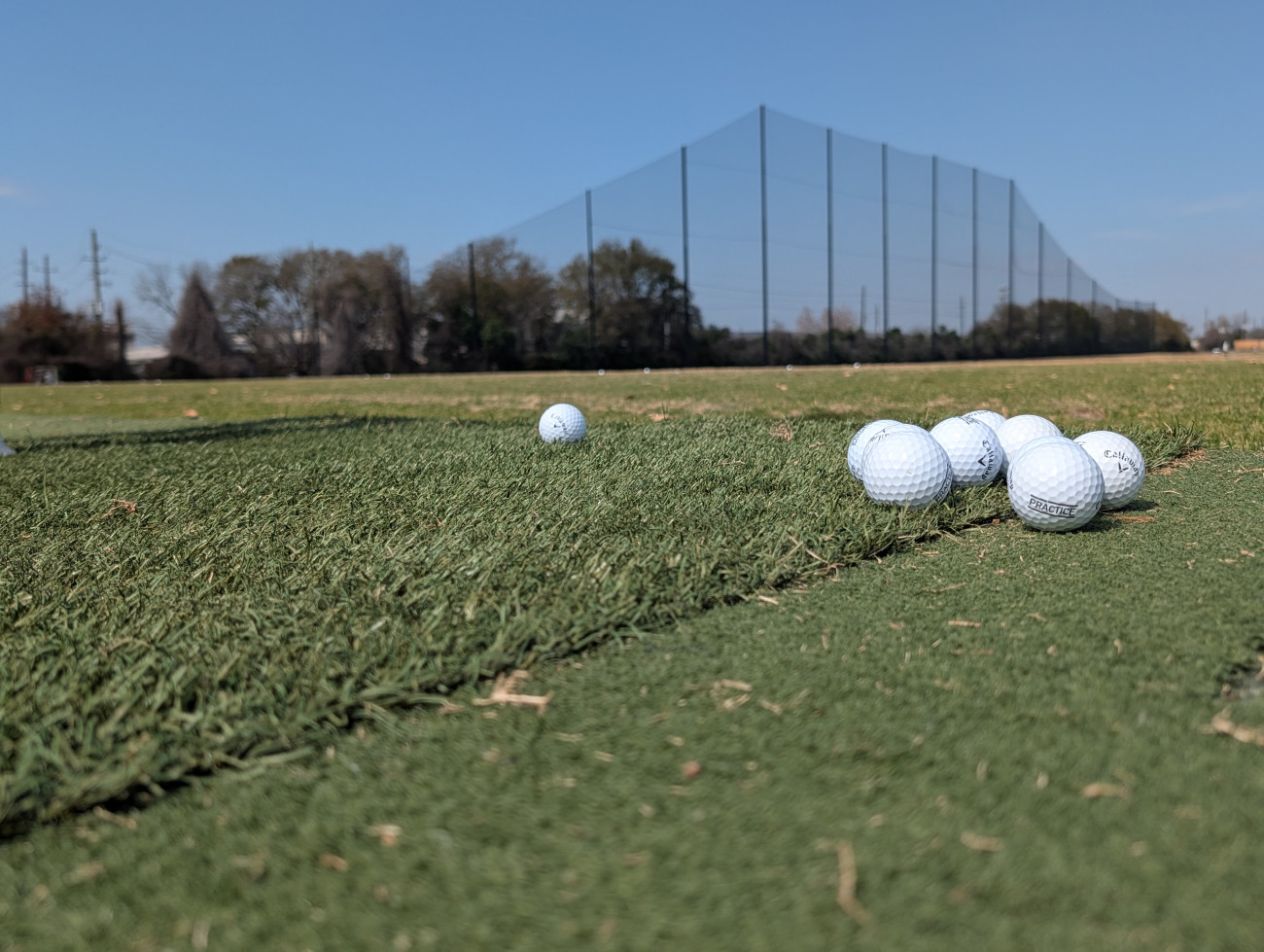
Golf Course Netting: What Facility Owners Should Know
Golf course netting is a custom containment system that keeps errant golf balls away from the people, parking areas, roads, homes and buildings outside the intended play area. Planning one starts with ball flight, not a product catalog. Owners should map where shots actually go, then design height, length, pole placement, materials and wind resistance around that exposure.
Picture a driving range that has worked fine for years. Then a business park goes up past the right side, and cars start parking where balls used to land in empty grass. The range didn’t change, but its risk did. A 2017 study in the American Journal of Emergency Medicine estimated that 663,471 people were treated in U.S. emergency departments for golf-related injuries from 1990 to 2011, and 16.0% of those injuries came from being struck by a golf ball.
This guide covers what to plan before you build, so your golf course netting matches the real risks on your property.
In this article:
- Why Golf Netting Is a Planning Decision, Not Just a Product
- Common Golf Netting Use Cases: Courses, Ranges, Tournaments, and Boundaries
- Planning for Height, Length, Ball Flight, and Surrounding Property
- Visibility, Aesthetics, and the Golfer Experience
- Materials and Pole Finishes for Outdoor Performance
- What to Ask Before Starting a Golf Netting Project
- Key Takeaways
- FAQs About Golf Course Netting
- Plan Your Golf Netting System With the Right Team
- Sources
Why Golf Netting Is a Planning Decision, Not Just a Product
Golf netting is a planning decision because no two golf properties share the same ball flight, neighbors or local rules. No national standard tells an owner how high or how long a system should be. The right answer has to come from the site itself: its layout, its shot patterns and what sits beyond the boundary.
That gap is documented. A 2024 analysis of golf negligence lawsuits in the Journal of Legal Aspects of Sport states that “within the recreational golf sector, buffer zone standards do not exist.” The researchers identified 85 cases that could possibly have been prevented with proper buffer zones.
Local codes add another layer. In Louisville, Kentucky, the Land Development Code requires golf courses to protect adjacent land with fences, plantings or sufficient area, and any netting must observe the district’s yard and height requirements. In Peninsula, Ohio, the village code requires driving range site plans to show expected trajectory or ball dispersion patterns next to homes, buildings, parking lots or public streets.
The game has changed, too. According to The R&A’s 2023 review of driving distance, the average drive for male amateurs grew from 200 yards in 1996 to 216 yards in 2019, and 2023 PGA TOUR averages were the longest on record. Many courses and ranges were laid out around shorter shots. A system built on old assumptions may not match how golfers hit the ball today.
Want the full picture on golf-ball risk and liability?
Our free guide, Golf Safety Netting for Courses & Driving Ranges: Risks, Liability, & Smart Containment Strategies, covers where injuries most often happen, compliance considerations, key engineering factors and common mistakes that add liability risk.
Common Golf Netting Use Cases: Courses, Ranges, Tournaments, and Boundaries
Most golf netting projects fall into three groups: driving range perimeters, course boundaries near homes or roads, and temporary tournament setups. Each has a different goal, so each calls for a different mix of height, length, materials and installation approach.
- Driving ranges: Repeated shots come from one concentrated hitting area, often for long hours, by players of every skill level. Side perimeters and the far end usually carry the most exposure.
- Course boundaries: Fairways, tee boxes and practice greens can border homes, roads, sidewalks or businesses. The concern here is property damage and people who never chose to be near the game.
- Tournaments and events: Temporary hitting nets and warm-up ranges have to go up, perform and come down on a fixed schedule.
| Consideration | Golf Course Boundaries | Driving Ranges | Tournaments and Events |
| Primary goal | Protect neighbors, roads and adjacent holes from errant shots | Contain high-volume, repeated ball flight | Protect players, workers and guests during a set event window |
| Typical exposure | Homes, streets, parking lots, nearby holes | Side perimeters, far end, neighboring property | Warm-up ranges, temporary hitting areas, guest zones |
| Common layout | Targeted runs along specific holes or property | Long, continuous perimeter runs, often taller where balls fly highest | Temporary systems sized to the event, plus removal and reinstallation |
| Key planning question | Where do slices and hooks leave the property? | How high and how far do balls travel from the hitting line? | What is the schedule for install, event use and teardown? |
Tournament Netting in Practice: The 124th U.S. Open
For the 124th U.S. Open at Pinehurst No. 2 in 2024, Nets of Texas removed and stored the resort’s original driving range netting, installed a 30′ x 300′ temporary hitting net to protect workers and built a 50′ x 800′ championship warm-up range for competitors. After the event, the team reinstalled about 1,650 linear feet of the original system. The work ran in four stages from January through September 2024, coordinated with facility management and USGA representatives
Planning for Height, Length, Ball Flight, and Surrounding Property
Height and length should come from ball flight and from what sits beyond the boundary, not from a stock size. Most driving ranges need systems between 40 and 90 feet tall. The right number for your site depends on hitting distance, terrain, common miss patterns and how close the nearest road, building or home sits.
A strong plan answers four questions:
- How high are balls when they reach the boundary? A net that stops a low line drive may do nothing against a high, long drive.
- Where do the misses go? Slices and hooks don’t spread evenly. Length should follow the real miss pattern, which often means more coverage on one side.
- What sits beyond the net? A parking lot, a busy road and an empty field call for very different levels of protection.
- What could change? New development next door can turn a low-risk boundary into a high-risk one.
Wind deserves its own line in the plan. A tall net catches wind across its whole surface, and that force moves into the poles, cables and foundations. Pole size, embedment depth and spacing all have to account for it. Nets of Texas evaluates wind loads, terrain and risk zones during site evaluations, and our installation fleet includes rock drilling rigs for secure pole installation in difficult ground. For a broader look at risk zones by sport, see our guide on where to install safety nets at a sports facility.
Case Study: Extending a Driving Range at BlackHorse Golf Club
BlackHorse Golf Club in Cypress, Texas, already had a driving range netting system when a business park was developed next door. Nets of Texas extended the system by 500 linear feet, with heights tapering from 60 to 100 feet based on ball flight. Some existing poles couldn’t be extended, so the team replaced them with custom-engineered black steel poles backed by engineer-stamped drawings. The project took about a month over three site visits.
Planning a new system or rethinking an old one?
Our team will evaluate your site, your ball flight and your neighbors before recommending a design.
Visibility, Aesthetics, and the Golfer Experience
Good golf netting protects people without taking over the view. Golfers want to track their shots, members want clean sightlines across the property and neighbors notice what goes up along the fence line. Material, mesh, color, pole finish and pole spacing all affect how visible a system feels once it’s installed.
- Thinner, stronger twine: Nylon and polyester are both flexible and strong. Their reduced profile improves visibility, which makes it a top choice for golf courses and premium facilities.
- Color and finish: Net color, mesh and layout can be customized, and powder-coated poles come in a range of colors.
- Height only where it’s needed: A system that steps up in height where ball flight requires it, like the 60 to 100 foot taper at BlackHorse, avoids overbuilding along the entire run.
Appearance can be a regulatory issue, too. Peninsula, Ohio, prohibits driving range netting unless the planning commission finds it compatible with surrounding uses.
Materials and Pole Finishes for Outdoor Performance
Outdoor golf netting has to handle high-speed impact, UV exposure and weather year after year. Golf balls can travel well over 150 mph, so material choice matters. Nets of Texas builds with knotted nylon and knotted polyester, all double-treated with a preservative, on steel poles that are galvanized, powder-coated or painted.
Here’s how the netting materials compare:
- Knotted nylon: UV-treated, flexible and cost-effective. It absorbs impact, resists abrasion and holds tension over time. Golf netting is available in #18, #36, #42, #60 and #90 sizes.
- Knotted polyester: A budget-conscious option with strong resistance to stretching and good moisture handling for outdoor use.
Mesh size matters, too. Under the Rules of Equipment, a golf ball must be at least 1.680 inches (42.67 mm) in diameter. Both the Pinehurst and BlackHorse projects used #18 nylon netting with a 1-inch mesh, small enough that a ball can’t pass through.
Your pole finish choice comes down to priorities:
- Galvanizing: A hot-dip zinc coating that blocks moisture and corrosion. Best when long-term durability with minimal maintenance comes first.
- Powder coating: A baked-on layer that resists chipping, scratching and fading.
- Painting: A budget-friendly finish with customizable color.
With proper maintenance, a golf netting system can last 10 to 15 years or more. For more on durability and weather resistance, see the top features to look for in quality golf netting.
What to Ask Before Starting a Golf Netting Project
The best golf netting projects start with clear answers about the site, the exposure and your goals. Work through this checklist before your first consultation. It speeds up design and makes proposals easier to compare.
Quick Planning Checklist
- Do you have a site plan or aerial view showing hitting areas, fairways and property lines?
- Where are balls leaving the property today, and how often?
- What sits beyond each boundary: homes, roads, parking, businesses or open land?
- Has anything nearby changed, or is new development planned?
- Have neighbors, staff or guests reported complaints or damage?
- Does your city or county set height or setback limits for netting, or require review?
- Is this a new system, an extension or a replacement of aging nets and poles?
- What is your timeline, and when can the course or range afford downtime?
Questions to Ask Your Netting Provider
- Will you visit the site and evaluate ball flight, wind loads and terrain before designing?
- Do you design, manufacture and install in-house, or subcontract parts of the job?
- Can you provide engineer-stamped drawings?
- Which golf projects have you completed?
Nets of Texas handles every step under one roof, from site evaluation and design to manufacturing and installation with our own crews. See how that process works for our other golf facility clients.
Key Takeaways
- Golf course netting should be planned around real ball flight and what sits beyond the boundary, not a stock size.
- No buffer zone standard exists for recreational golf, and local codes can limit netting height, placement and appearance.
- Height, length, pole engineering and wind loads have to be designed together. Most driving ranges need 40 to 90 feet, and some need more.
- Material, mesh, color and pole finish shape both durability and how the system looks from the tee.
- A site evaluation before design is the best way to avoid overbuilding or underprotecting.
Talk to the Netting Experts. We’ve Got You Covered.
FAQs About Golf Course Netting
How tall should golf course netting be?
There’s no single answer. Most driving ranges need systems between 40 and 90 feet tall, and some sites go higher. At BlackHorse Golf Club, the extension tapered from 60 to 100 feet based on ball flight. A site evaluation is the only reliable way to set the right height.
How long does golf netting last?
With quality materials, professional installation and proper maintenance, golf netting systems can last 10 to 15 years or more. Routine inspections for wear and tension help a system last.
Do I need a permit to install golf netting?
It depends on where your facility is located. Some local codes set height and yard requirements for netting, and others require planning commission review. Check with your local planning or zoning office early, and ask your netting provider whether engineer-stamped drawings are available.
Can existing golf netting be raised or extended?
Often, yes. An extension can add length or height where exposure has changed. Some existing poles can’t support added height and need to be replaced, as they were at BlackHorse Golf Club.
How long does golf netting installation take?
Timelines depend on the size and complexity of the project. Most installations are completed within a few days to a few weeks after fabrication. Phased projects, like tournament work, can span several months.
Plan Your Golf Netting System With the Right Team
Golf netting is a long-term safety investment, so it pays to plan it right the first time. Nets of Texas brings more than 30 years of experience focused exclusively on sports safety netting, and we serve golf facilities nationwide from our Hockley, Texas, headquarters. We design, manufacture and install every system with our own team, so you never juggle multiple contractors.
Built for Impact. Engineered for Safety.
Sources
- American Journal of Emergency Medicine (2017). Golf-related injuries treated in U.S. emergency departments, 1990 to 2011. https://ajemjournal.com/article/S0735-6757%2817%2930416-3/fulltext
- Bird, N., & Moiseichik, M. (2024). Buffer Zones Through the Lens of Golf: A Negligence Case Content Analysis. Journal of Legal Aspects of Sport, 34(1). https://journals.indianapolis.iu.edu/index.php/jlas/article/view/27261
- Louisville Metro Land Development Code, Section 4.3.21 Golf Courses. https://codelibrary.amlegal.com/codes/louisvillemetro/latest/loukyldc/0-0-0-9968
- Village of Peninsula, Ohio, Codified Ordinances, Section 1141.16 Golf Driving Ranges. https://codelibrary.amlegal.com/codes/peninsula/latest/peninsula_oh/0-0-0-22760
- The R&A (2023). A Review of Driving Distance 2023. https://assets.randa.org/c42c7bf4-dca7-00ea-4f2e-373223f80f76/1a6cb987-5a90-4dcf-b7a3-13fb2e385deb/2023%20Distance%20Report.pdf
- The R&A. Rules of Equipment, Part 4: Conformance of Balls. https://www.randa.org/roe/the-rules-of-equipment/part-4-conformance-of-balls